Personal protective equipment from head to toe.
Safety at work is a fundamental concern for any company, since protecting the physical integrity of workers is essential to prevent workplace accidents. In this sense, personal protective equipment (PPE) is a fundamental element to guarantee employee safety.
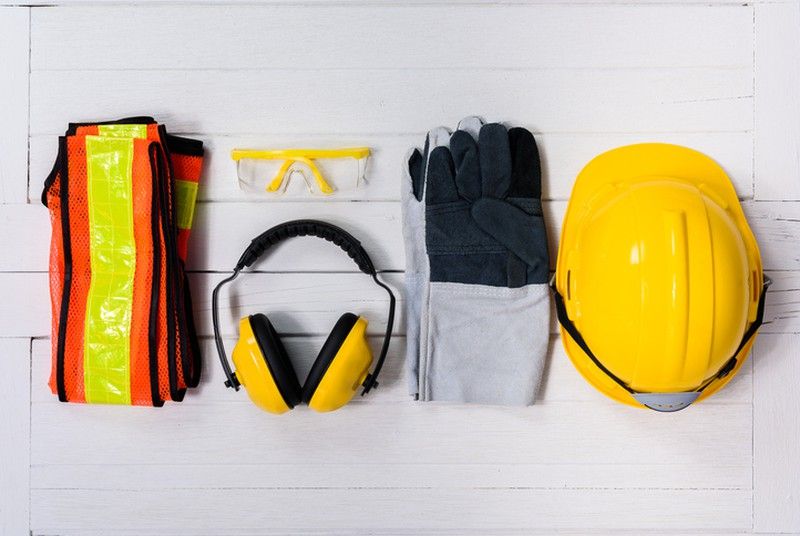
From head to toe, there are a variety of personal protective equipment that workers can use to protect themselves from work-related injuries and illnesses. Some of the most common PPE is described below.
Personal protective equipment (PPE) is essential to ensuring the safety and health of workers in the workplace. This equipment should be selected based on the type of work being performed and the risks associated with it. In this sense, there are different categories of PPE risks that we must know in order to choose the appropriate protective equipment.
HEAD PROTECTORS
• Safety helmets (public works and construction, mines and various industries).
• Helmets for protection against shocks and impacts.
• Protective clothing for the head (caps, hats, etc., made of fabric, coated fabric, etc.).
• Helmets for special uses (fire, chemicals, etc.).
EAR PROTECTORS
• “Earplug” type hearing protectors.
• Disposable or reusable hearing protectors.
• “Earmuff” type hearing protectors, with head harness, under the chin or neck.
• Noise-cancelling helmets.
• Hearing protectors that can be attached to industrial safety helmets.
• Level-dependent hearing protectors.
• Hearing protectors with intercom devices.
EYE AND FACE PROTECTORS
• “Universal” frame glasses.
• “Full” frame glasses (uni or biocular).
• “Cazoletas” frame glasses.
• Face shields.
• Welding shields (handheld, head, attachable to a protective helmet for industry).
RESPIRATORY TRACT PROTECTION
• Particle filtering equipment (nuisance, harmful, toxic or radioactive).
• Gas and vapour filtering equipment.
• Mixed filtering equipment.
• Free air insulating equipment.
• Insulating equipment with air supply.
• Respiratory equipment with helmet or screen for welding.
• Respiratory equipment with removable mask for welding.
• Scuba diving equipment.
HAND AND ARM PROTECTORS
• Gloves against mechanical damage (punctures, cuts, vibrations).
• Gloves against chemical damage.
• Gloves against electrical damage.
• Gloves against thermal damage.
• Mittens.
• Sleeves and arm warmers.
FOOT AND LEG PROTECTORS
• Safety footwear.
• Protective footwear.
• Work footwear.
• Heat-protective footwear and overshoes.
• Cold-protective footwear and overshoes.
• Electric-proof footwear.
• Footwear for protection against chainsaws.
• Removable instep protectors.
• Gaiters.
• Removable soles (anti-thermal, anti-perforation or anti-perspiration).
• Knee pads.
SKIN PROTECTORS
• Protective creams and ointments.
TRUNK AND ABDOMEN PROTECTORS
• Vests, jackets and aprons for protection against mechanical damage (punctures, cuts, projections of molten metals).
• Vests, jackets and aprons for protection against chemical damage.
• Thermal vests.
• Life jackets.
• X-ray protection aprons.
• Trunk support belts.
• Anti-vibration belts and girdles.
TOTAL BODY PROTECTION
• Protective equipment against falls from a height.
• Sliding fall arrest devices.
• Harnesses.
• Support belts.
• Fall arrest devices with shock absorbers.
• Protective clothing.
• Protective clothing against mechanical damage (puncture, cuts).
• Protective clothing against chemical damage.
• Protective clothing against molten metal splashes and infrared radiation.
• Protective clothing against intense heat sources or thermal stress.
• Protective clothing against low temperatures.
• Protective clothing against radioactive contamination.
• Dust-proof clothing.
• Gas-proof clothing.
• Clothing and accessories (armbands, gloves) for signaling (reflective, fluorescent).
It is important for employers to provide the necessary personal protective equipment for their workers, and for them to use it correctly. In addition, regular inspections are necessary to ensure that personal protective equipment is in good condition and meets safety standards.
Safety in the workplace is a priority for all businesses, and it is important for employers to take appropriate measures to ensure the safety and protection of their employees. One of the most important steps employers can take is to ensure that their employees have the appropriate clothing, apparel, and protection to perform their jobs safely and effectively.
Appropriate clothing and apparel can help prevent workplace injuries. Employers should provide appropriate clothing and apparel for employees working in different environments and situations. For example, construction workers will need protective clothing to protect them from debris and other hazards on the construction site, while laboratory workers will need specialized laboratory clothing to prevent exposure to hazardous chemicals.
In addition to providing appropriate clothing and apparel, companies must also ensure that personal protection requirements are met for employees. This may include the need for gloves, hard hats, safety glasses, face masks, and other personal protective equipment. The choice of personal protective equipment will depend on the type of work and the specific risks associated with the job.
The company must also ensure that clothing and apparel are properly maintained. Clothing and apparel that is worn out or does not fit properly can pose a hazard to employees. Employers must regularly inspect employee clothing and apparel to ensure that it is in good condition and fits properly.
Employers should also take into account the cultural and religious needs of their employees when selecting clothing and attire. Some employees may require specific attire for religious or cultural reasons, and it is important for employers to respect these needs and provide appropriate options.
Appropriate selection of clothing and attire can also help create a professional and safe work environment. Employers may opt for uniforms or specific work clothing for their employees to help maintain a cohesive work environment. Additionally, providing appropriate work clothing can help prevent employees from wearing inappropriate or unsafe clothing in the workplace.
Royal Decree 773/1997, of May 30, establishes the minimum health and safety provisions relating to the use by workers of personal protective equipment at work.
This Royal Decree aims to protect the health and safety of workers in the workplace by implementing appropriate personal protection measures. To this end, it establishes the obligations and responsibilities of employers and workers in relation to the use of personal protective equipment, including the selection, use, maintenance, inspection and replacement of such equipment.
Royal Decree 773/1997 establishes that employers are responsible for providing workers with the necessary personal protective equipment to ensure their safety in the workplace. In addition, employers must ensure that personal protective equipment is used correctly and is properly maintained.
The Royal Decree establishes that personal protective equipment must be selected based on the specific risks associated with each task and that it must comply with European safety standards. It also establishes provisions regarding the training and information that workers must receive on personal protective equipment, as well as the control and monitoring measures necessary to ensure the effectiveness of the equipment.
In summary, Royal Decree 773/1997 establishes the obligations and responsibilities of employers and workers in relation to the use of personal protective equipment in the workplace, with the aim of ensuring the safety and health of workers.
Personal protective equipment covers three risk categories, which are distinguished by both the protective action and the required test methods.
Category I
• Mechanical damage with superficial effects (gardening gloves, thimbles, etc.).
• Low-damage maintenance products with easily reversible effects (gloves for protection against diluted detergent solutions, etc.).
• Risks incurred during tasks involving the handling of hot parts that do not expose the user to temperatures above 50o C or to dangerous shocks (gloves, aprons for professional use, etc.).
• Atmospheric agents that are neither exceptional nor extreme (hats, seasonal clothing, shoes and boots, etc.).
• Minor shocks and vibrations that do not affect vital parts of the body and cannot cause irreversible injuries (light helmets for scalp protection, gloves, light footwear, etc.).
• Solar radiation (sunglasses).
Category II
• Effectiveness: PPE for protection against minimal risks. Equipment intended to protect against medium or high-grade risks, but not with fatal or irreversible consequences
• Test methods: CE mark, verification by a certified laboratory and approval by a body authorised to issue certifications.
• Examples: protective helmets, protective gloves for welding, goggles.
Category III
• Filtering respiratory protection equipment that protects against solid and liquid aerosols or against irritating, dangerous, toxic or radiotoxic gases.
• Respiratory protection equipment that is completely insulated from the atmosphere, including those intended for immersion.
• PPE that only provides limited protection against chemical attacks or ionising radiation.
• Equipment for intervention in hot environments, the effects of which are comparable to those of an ambient temperature of 100o C or higher, with or without infrared radiation, flames or large projections of molten materials.
• Equipment for intervention in cold environments, the effects of which are comparable to those of an ambient temperature of -50o C.
• PPE intended to protect against falls from a certain height.
• PPE intended to protect against electrical risks for work carried out under dangerous voltages or those used as high voltage insulators.
Safety in the workplace is essential to prevent accidents and injuries to workers. To do this, having adequate personal protective equipment is essential. At our company, we offer a wide variety of personal protective equipment for any part of the body.
Our personal protective equipment is designed with the most resistant and high-quality materials to guarantee maximum protection at all times. From safety helmets to protective gloves and boots, we offer a wide variety of options to cover any protection need in the workplace.
In addition, our personal protective equipment complies with all necessary rules and regulations, ensuring the safety and peace of mind of workers and employers.
Do not skimp on the safety of your workers, invest in adequate personal protective equipment and avoid possible accidents and injuries in the workplace. At our company you will find the best selection of personal protective equipment for any part of the body, with the best prices and the quality you deserve. Contact us and let our experts help you find the personal protective equipment that best suits your needs.
Other related articles
 April 22, 2025
Heat, an enemy of workplace safety
The problem of working under extreme heat conditions comes from two sources: … March 8, 2025
The importance of colors in work clothes
Work clothes are much more than just a uniform; It is a … Feb. 8, 2025
Health EPIS
In 2020 they have been the most demanded articles, by professionals and … Jan. 22, 2025
Footwear for work. What should the ideal work footwear be like?
Work footwear is a necessity for anyone working in an environment where … Nov. 22, 2024
Opinions of our clients
Receive our news