Guide to selecting protective gloves
Proper selection of protective gloves is essential to ensure workplace safety in many situations. Protective gloves are necessary to protect workers from hand injuries and exposure to hazardous substances. However, selecting the right protective gloves can be challenging as there are many factors to consider.
In this post, we present a guide on the key aspects to consider when selecting the right protective gloves.
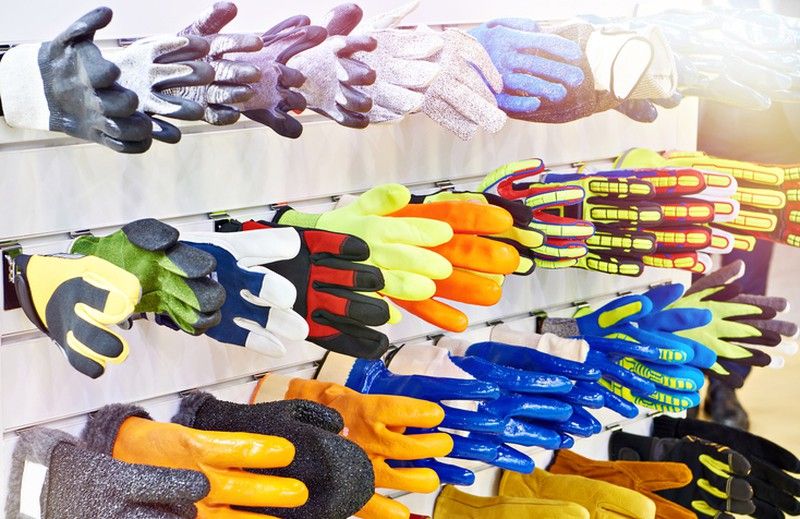
Some of the things to keep in mind are:
Identify the risks:The first step in selecting the right protective gloves is to identify the risks that workers are exposed to. Every job can present different risks, so it's important to identify the specific risks that may affect workers in your industry.
Select the right material: Once you've identified the risks, choose a glove material that is resistant to the specific hazards. For example, if workers are exposed to chemicals, nitrile or neoprene gloves are recommended. If workers are exposed to high temperatures, thermal protection gloves are recommended.
Consider the proper fit: It's important that protective gloves fit workers' hands properly. A glove that is too big or too small can be uncomfortable and even dangerous, as it can hinder movement and manual dexterity. Protective gloves should allow for good air circulation to prevent sweating and overheating.
Check for abrasion resistance: Abrasion resistance is an important factor to consider when selecting protective gloves. Workers who handle sharp or rough objects should wear gloves that are abrasion resistant to prevent scrapes or cuts to their hands.
Check for puncture resistance: Some jobs may require handling sharp objects, such as needles or glass. In these cases, it is recommended to wear protective gloves that are puncture resistant to prevent hand injuries.
Ensure adequate flexibility: The flexibility of protective gloves is important to allow for good manual dexterity. Workers should be able to move their hands easily while wearing protective gloves. Choosing gloves that are too stiff can make finger movement difficult and reduce work efficiency.
Consider durability: Durability is an important factor to consider when selecting the right protective gloves. Protective gloves should be wear-resistant and have a long service life so that workers do not have to replace them frequently.
Perform field tests: It is important to conduct field tests to ensure that the selected protective gloves are effective and suitable for the job. Workers should test the gloves in real work situations so that they will not have any problems when using them.
According to the UNE-EN 420 regulation, a glove is considered a PPE that is used to protect the hand or part of it from various risks.
These risks include mechanical, thermal, chemical and biological, electrical, vibration and ionizing radiation hazards.
In this guide, we will focus only on gloves that protect against the first three risks, as they are the most common.
For electrical protection gloves, readers can refer to the EN 60903 standard and the Normative Disclosure Sheet (FDN) published by the INSHT.Each type of glove is classified according to the level of protection it provides, determined by the results of technical tests that assess its conformity. These levels are indicated by numbers and are used to classify the different types of gloves available on the market.
Gloves against mechanical risks
Four levels are established (1 being the least protection and 4 the most protection) for each of the parameters indicated below:
• abrasion resistance
• resistance to blade cuts (in this case there are five levels)
• tear resistance
• puncture resistance
Gloves against thermal risks (heat and/or fire)
Four levels of performance are defined (1 indicating the least protection and 4 the most) for each of the parameters indicated below:
• flame behaviour
• resistance to contact heat
• resistance to convective heat
• resistance to radiant heat
• resistance to small splashes of molten metal
• resistance to large masses of metal
Chemical gloves
A scale with six protection indices is defined for each glove component/chemical pair (1 indicates the lowest protection and 6 the highest).
These "protection indices" are determined based on a test parameter called "breakthrough time" (BT, Breakthrough Time) which indicates the time it takes for the chemical to permeate the glove.
The CE marking must be mandatory in accordance with the provisions of Royal Decree 1407/1992 and subsequent amendments. The glove may be marked with the following elements, as required by the UNE - EN 420 standard.
1. Name, trademark or other means of identification of the manufacturer or authorized representative.
2. Name of the glove (trade name or code, which allows the user to identify the product with the range of the manufacturer or its authorized representative).
3. Size.
4. Expiry date, if the protective performance may be significantly affected by ageing.
Likewise, the glove packaging must be marked with these elements and also with the appropriate pictogram for the risk covered by the glove, when it reaches at least level 1 in the corresponding performance test.
Protective gloves are essential personal protective equipment (PPE) for anyone working in environments with potential hand hazards. These hazards can include cuts, abrasions, punctures, burns, chemical exposure, and more. However, not all protective gloves are created equal, and it is important to select the right glove for the specific job at hand.
To select the right protective glove, it is first important to identify the specific hazards the worker will face. Protective gloves are made to protect against different types of hazards, such as those mentioned above. Therefore, it is critical to know what hazards you need protection from in order to make an informed decision about the right glove.
One of the most common hazards in workplaces is cuts. Cuts can occur in any type of job and can be caused by a variety of sharp objects, such as tools, glass, or metals. Protective gloves designed to protect against cuts are made from penetration-resistant materials such as fiberglass, stainless steel, or Kevlar. Additionally, some cut protection gloves have a nitrile or latex coating to improve grip and dexterity.
Another common workplace hazard is exposure to chemicals. Workers in industries such as chemicals, pharmaceuticals, and food, among others, must protect themselves from exposure to chemicals that may be harmful to the skin. Chemical protection gloves are made from chemical-resistant materials such as neoprene, PVC, or nitrile. These gloves are also rated for their chemical resistance capabilities, and should be selected based on the specific chemical the worker will be dealing with.
Additionally, some jobs involve exposure to high temperatures and therefore require thermal protection gloves. Thermal protection gloves are made from heat-resistant materials such as leather or aramid and can be used to protect hands from burns from contact with hot surfaces or flames.
On the other hand, in jobs that involve handling dangerous machinery, puncture protection gloves are required. These gloves are made from penetration-resistant materials such as stainless steel and are used to protect hands from sharp objects that may penetrate the skin.
It is important to note that not all protective gloves are designed to protect against all of the risks mentioned above. Therefore, it is essential for workers to identify the specific risks in their workplace and select the appropriate glove according to the needs.
In summary, protective gloves are an important part of any personal protective equipment. The potential risks that workers face
Some practical tips on this subject are:
• The skin itself is a good protection against external aggressions. Therefore, it is necessary to ensure proper hand hygiene with soap and water and to apply a protective cream if necessary.
• When choosing protective gloves, it is necessary to weigh up, on the one hand, the sensitivity to touch and the ability to grip, and on the other, the need for the highest possible protection.
• Protective gloves must be the correct size. For example, wearing gloves that are too tight can reduce their insulating properties or impede circulation.
• When choosing gloves for protection against chemicals, the following factors must be taken into account:
o In some cases, certain materials, while providing good protection against some chemicals, provide very poor protection against others.
o Mixing certain chemicals can sometimes result in properties that differ from those expected based on knowledge of the properties of each chemical.
• PVA gloves are not waterproof.
• Sweating may occur when wearing protective gloves. This problem is solved by using gloves with absorbent lining, however, this element can reduce the touch and flexibility of the fingers, as well as the ability to grip.
• Using lined gloves also reduces problems such as chafing caused by seams, etc.
When selecting the right work gloves, it's critical to consider their size. A glove that doesn't fit properly can cause discomfort, affect work performance, and even put a worker's safety at risk.
To find the right work glove size, the first thing you should do is measure your hand. You can do this by using a flexible measuring tape or a piece of string and a ruler. The measurement should be taken with your hand open and extended, not including your thumb.
The measurement obtained should be compared to the glove sizing chart provided by the manufacturer. Each brand and model may have slightly different measurements, so it's important to use the chart specific to the product you're considering.
It's important to note that work gloves typically have a looser fit than everyday gloves, allowing for greater mobility and flexibility in your hands. Therefore, if your hand measurement is on the borderline between two sizes, it is recommended to choose the larger size.
In addition to the hand measurement, it is also important to consider the type of glove you need. Some models are designed for a tighter fit, while others are bulkier and may require a larger size.
You should also consider the glove material. Leather gloves may become a little tighter after a period of use, while fabric gloves may give a little over time. Therefore, it is advisable to try on gloves before purchasing, if possible.
In case it is not possible to try on gloves before purchasing, it is important to check the seller's return policy. If the glove does not fit properly, it may be necessary to exchange it for a different size.
When selecting work gloves, it is important to remember that not all gloves are suitable for all tasks. Every job has different safety requirements, which means that gloves should be selected that are specific to the job at hand.
For example, work gloves for construction and handling heavy tools may require a tighter fit and greater protection against cuts and abrasions. Work gloves for handling chemicals, on the other hand, should be resistant to the specific chemicals that will be handled.
In summary, to find the right work glove size, it is essential to measure your hand and use the sizing chart provided by the manufacturer. It is also important to consider the type of glove you need and review the seller's return policy in case a size change is necessary. And finally, it is important to remember that not all gloves are suitable for all tasks, so gloves specific to the job you will be performing should be selected.
Other related articles
 April 22, 2025
Heat, an enemy of workplace safety
The problem of working under extreme heat conditions comes from two sources: … March 8, 2025
The importance of colors in work clothes
Work clothes are much more than just a uniform; It is a … Feb. 8, 2025
Health EPIS
In 2020 they have been the most demanded articles, by professionals and … Jan. 22, 2025
Footwear for work. What should the ideal work footwear be like?
Work footwear is a necessity for anyone working in an environment where … Nov. 22, 2024
Opinions of our clients
Receive our news