News - Page 5

THE WOOD SECTOR - WHAT EPIS ARE NECESSARY?
The wood sector presents, like other sectors, health risks, when carrying out tasks that can cause illness or accidents for those who perform them. For this reason, the use of Personal Protective Equipment (PPE) is essential to protect the user from possible injuries. In this blog post we want to provide the necessary knowledge to facilitate the most appropriate choice to use these protection elements and their regulations.
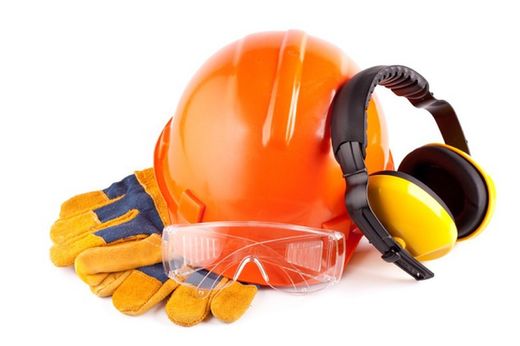
Personal Protective Equipment (PPE) for construction professionals
As you know, within the safety at work in the construction sector, Personal Protective Equipment (PPE) has a central place. We are talking about a series of garments and accessories that make up the most immediate protection for the worker in his workplace, and whose (variable) characteristics will be adapted according to the risks that are present in each specific job (work at height, crane, welding operations, formwork, etc.). What Personal Protective Equipment is essential in construction? We can divide the PPE into seven main groups, which we will detail below: 1. Head protection. Undoubtedly, the reference PPE, as it is the first that comes to mind when thinking about worker safety. There are several types, as each one is manufactured according to the risks to which the worker is exposed: there are those that resist electric current, lateral deformations, high temperatures, etc. 2. Eye and face protection. For mechanical face protection and to avoid other risks (such as chemical splashes), three types of eye protectors have been designed, including two types of face shields: Universal frame glasses, which offer you mechanical and radiation protection. Integral frame glasses, which protect you against vapors and gases. Facial screens, covering the entire face for greater protection. They are made of mesh (metal or plastic) and transparent (polycarbonate). 3. Respiratory protection. To avoid the damages that gases, vapors and other particles can cause to us, there are several types of masks: self-filtering, equipment with air supply, full masks, half masks, etc. Its use is recommended for welding, earthmoving, asphalting or stone cutting operations. 4. Hearing protection. They muffle loud noises (mainly caused by the jackhammer) and the hearing damage they could cause. There are two main types of hearing protectors: earplugs and ear muffs. 5. Protection of hands. There is a wide range of gloves, whose use varies depending on each occupational risk: Mechanical protection glove (normally leather) for material discharges and minor risks. Insulating gloves (latex) for electrical work. Chemical protection gloves. Protective gloves for welders. Cold protection gloves. 6. Protection of the feet. Since the chances of suffering foot accidents are high when working with heavy materials, you are facing one of the most frequently used PPE. Regarding its characteristics, safety footwear must have a reinforced toe box and a protective insole against punctures. Furthermore, ergonomics and comfort are a priority. 7. Protection against falls. These teams are used when working more than two meters high, and they are two: retention and fall arrest. These are the PPE that you should know.
- Previous
- Page 5 of 5
Opinions of our clients
Receive our news